


HTH spa™ Test Strips
Hot Tub Test Strips for Chlorine and pH
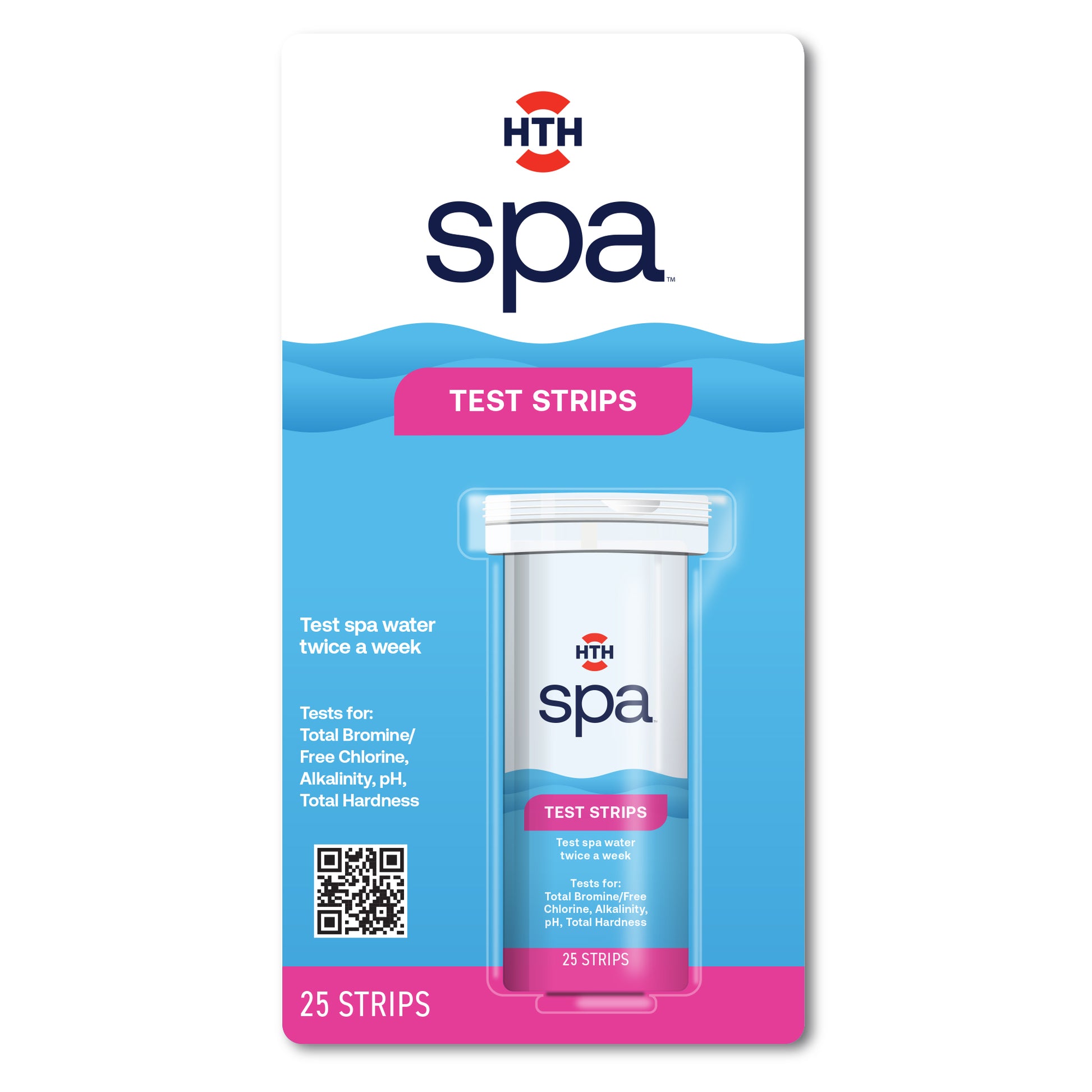


HTH spa™ Test Strips
Hot Tub Test Strips for Chlorine and pH
HTH™ Spa Test Strips make it simple to maintain clean, balanced, and healthy spa or hot tub water.
- These reliable spa test strips quickly measure five essential elements—total bromine, free chlorine, pH, alkalinity, and total hardness—giving you accurate results in seconds.
- Designed for convenience and confidence, they help you keep water crystal clear and properly balanced for a safe, comfortable soak.
- Compatible with all spa types and sanitizers.
HTH™ Spa Test Strips deliver professional-grade testing made easy.


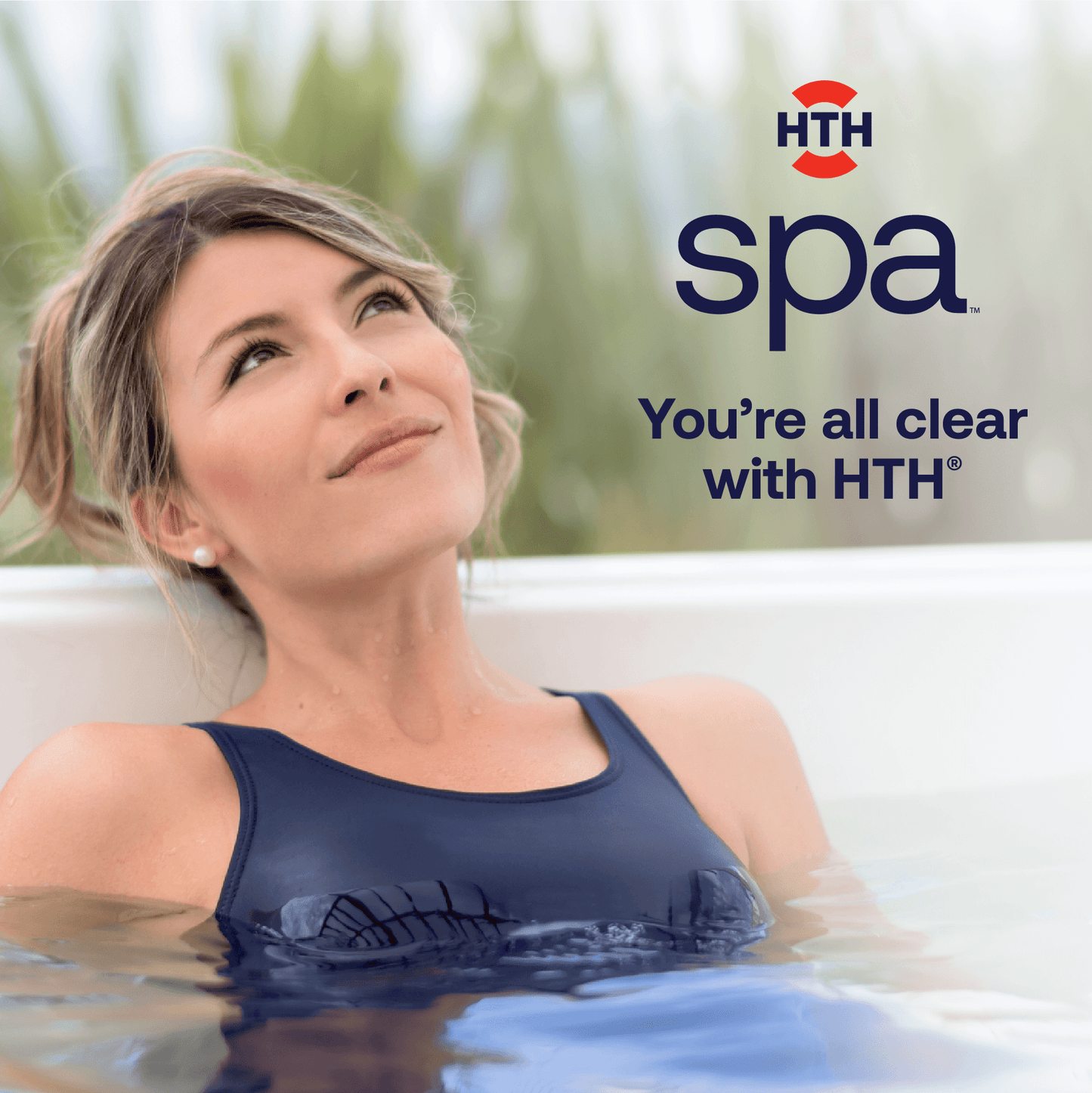
Product Benefits
How to Use
Product Overview
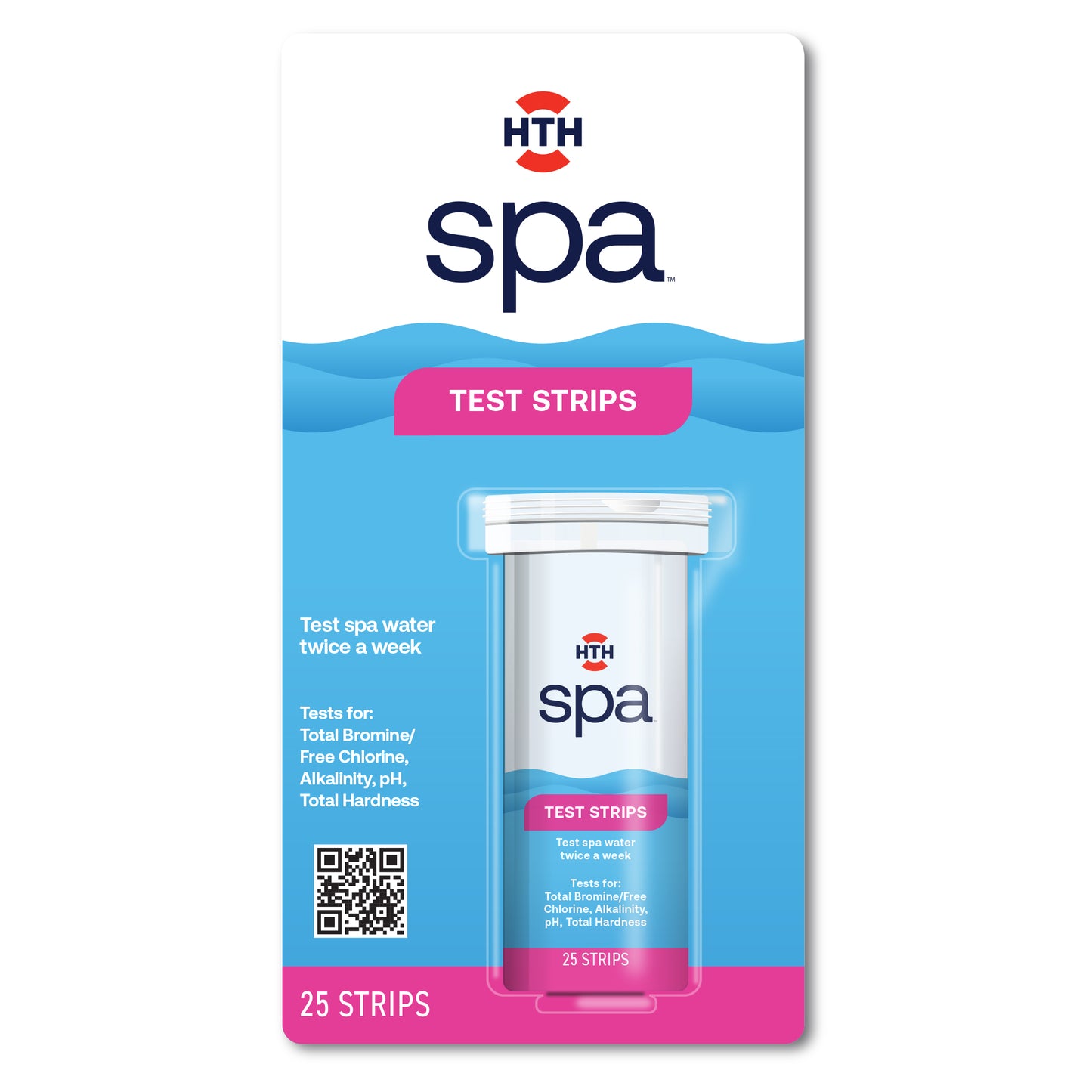
HTH Spa Test Strips make it easy to monitor spa and hot tub water in seconds. Designed for quick, accurate testing, these strips help you maintain comfortable, balanced water by checking key sanitizer and balance levels twice a week.Each bottle contains 25 strips for routine spa care.
What This Tests
- Total Bromine or Free Chlorine
- Total Alkalinity
- pH
- Total Hardness
What This Tests
- Total Bromine or Free Chlorine
- Total Alkalinity
- pH
- Total Hardness
Ideal Spa Water Ranges
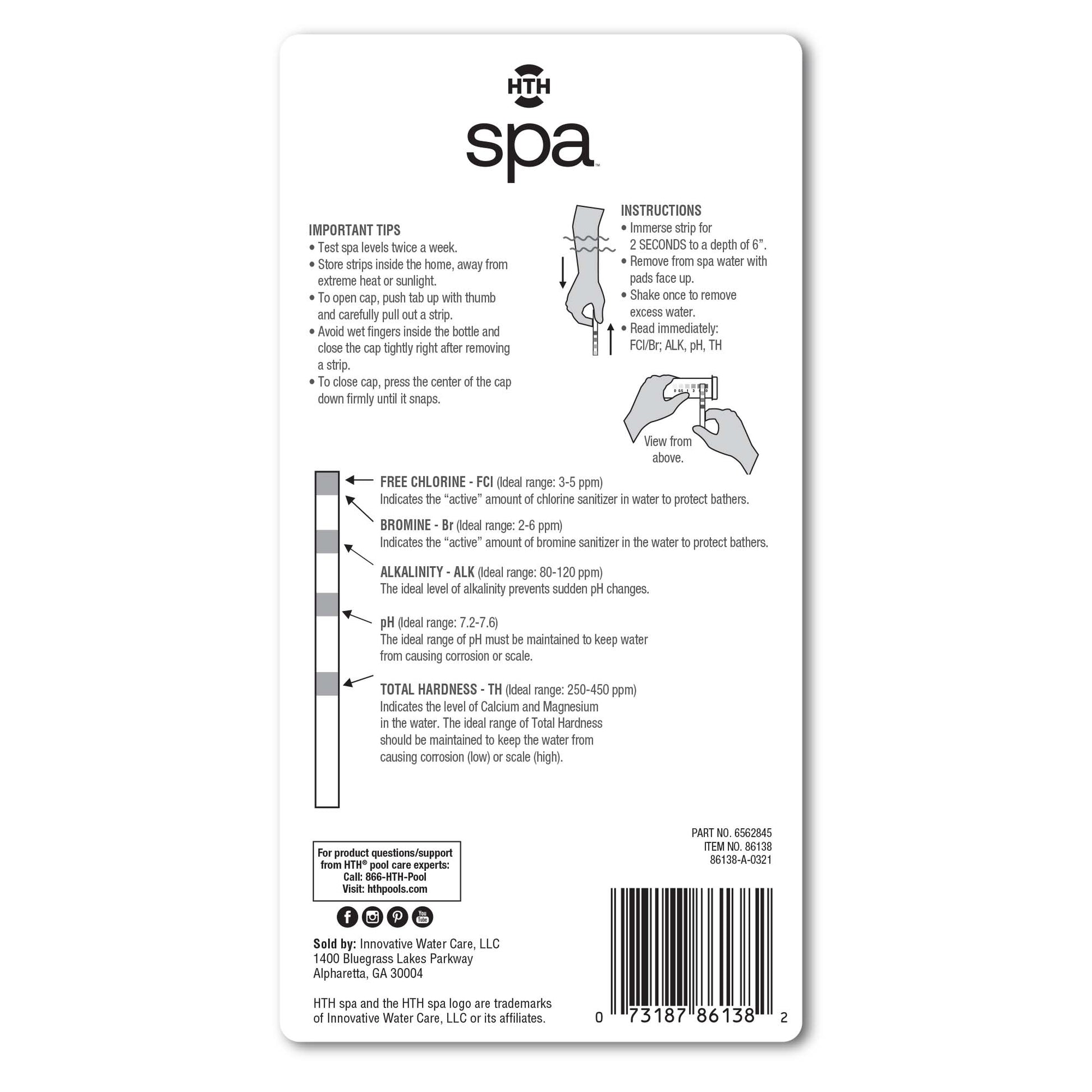
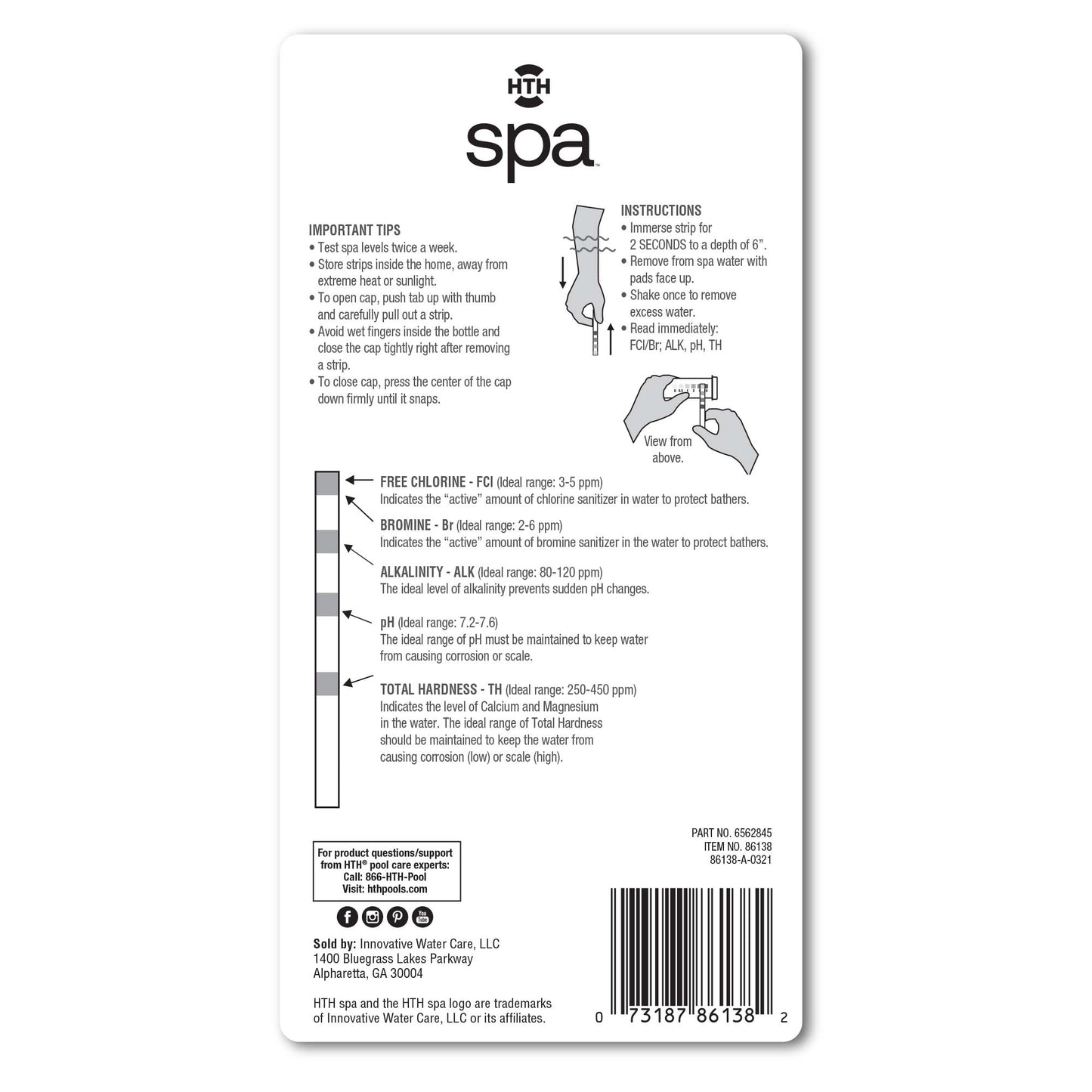
- Free Chlorine: 3–5 ppm
- Bromine: 2–6 ppm
- Total Alkalinity: 80–120 ppm
- pH: 7.2–7.6
- Total Hardness: 250–450 ppm
Helpful Tips
- Test spa water at least twice a week.
- Always read results immediately for best accuracy.
- Avoid touching test pads with wet fingers.
- Store strips indoors and away from heat or sunlight.
Safety, Storage, and Disposal
Storage & Care
Close the bottle tightly after each use.
Store in a cool, dry location away from heat, humidity, and direct sunlight.
Discard strips if they become damp or discolored.
Frequently Asked Questions
-
What is the hot tub test strip color chart, and how do I read the results?
-
What is the difference between pool test strips and spa test strips?
-
What do I do after testing my hot tub water with test strips?
-
Why do my hot tub test strip results change so much day to day?
-
What does HTH spa Alkalinity Up do for a hot tub?
-
Why does hot tub water need alkalinity adjusted more often than pool water?
Reviews
Related Products
Discover products our customers trust and recommend

Block Chlorine Lock with Cal Hypo
Discover how Cal Hypo pool chlorine works without CYA to prevent chlorine lock and keep pool water clear, balanced, and safe for swimmers.

Simplified Pool and Spa Care with HTH™ Test to Swim
Simplify pool and spa water testing with the HTH™ Test to Swim™ App. Scan your test strip, get instant results, and receive personalized pool care recommendations.

Transform Your Pool with Brilliance™
Looking for clearer pool water? Discover how HTH™ Brilliance Cal Hypo Chlorine Tablets improve water clarity and prevent chlorine lock.
Quick Spa Tips

Always read product label directions and use only as directed

Always add chemicals to spa water, never the other way around

Never add chemicals to spa water when people are in the spa

Never mix products together

Always store spa products in a cool, dry location and away from direct sunlight

Always wear proper safety equipment when handling chemicals


